Can a Steel Pergola Be Installed During the Winter Months?
Yes, a steel pergola can be installed during the winter months, provided weather conditions, ground stability, and foundation requirements allow for safe construction. Steel pergolas are suitable for year-round installation in many climates, although frozen ground, heavy precipitation, and extreme temperatures may affect scheduling. Proper planning helps homeowners complete their outdoor improvements before spring arrives.
At Steel Shade Pergolas, we understand that improving your outdoor living space doesn’t have to wait until warmer weather. A custom steel pergola can transform an ordinary patio into a comfortable, attractive gathering area that complements your home throughout the seasons. Our focus on durable steel pergola solutions helps homeowners explore designs that combine structural strength, modern style, and long-term functionality.
Winter can be a practical time to begin planning your backyard transformation. Whether you’re considering a new patio pergola or upgrading an existing outdoor space, understanding seasonal installation requirements can help you make informed decisions. With the right preparation, a winter pergola project can position you to enjoy your backyard as soon as spring arrives.
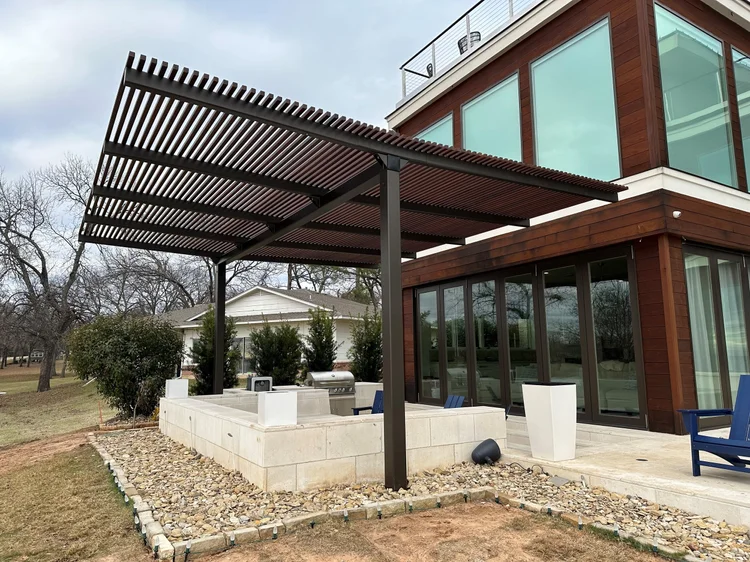
Winter Steel Pergola Installation: Weather, Foundations, and Planning
Installing a steel pergola during colder months requires careful consideration of the installation site, local weather patterns, and structural requirements. While winter weather may introduce challenges, it does not automatically prevent a successful installation.
Can Steel Pergolas Be Installed in Cold or Freezing Temperatures?
Steel pergolas can be installed in cold temperatures, but freezing conditions may affect foundation construction and jobsite safety. Steel components can generally be assembled during cooler weather, provided conditions allow workers to handle and secure materials safely.
The primary concerns involve site preparation and foundation work rather than the steel structure itself.
Important factors include:
- Frozen ground: Hard or frozen soil can make excavation more difficult.
- Concrete curing: Low temperatures can slow strength development and require protective measures.
- Snow and ice: Slippery surfaces can create safety hazards during construction.
- Wind: Strong winds can interfere with lifting and positioning large steel components.
- Installation access: Wet or unstable ground may limit equipment movement.
According to the American Concrete Institute (ACI), cold-weather concreting requires special procedures to protect fresh concrete from freezing and support proper strength development.
Homeowners should have their installation site evaluated before scheduling work during freezing conditions.
What Are the Benefits of Installing a Steel Pergola in Winter?
Installing a steel pergola during winter can help homeowners prepare their patios for spring and avoid postponing outdoor improvements until peak entertaining season.
Although installation schedules depend on local conditions and contractor availability, winter planning offers several potential advantages.
1. Prepare your backyard before spring
Completing a pergola installation during winter allows homeowners to focus on enjoying their outdoor spaces when temperatures become more comfortable.
Instead of scheduling construction during spring gatherings, you may already have a finished patio pergola ready for outdoor dining and relaxation.
2. Explore potential scheduling flexibility
Some outdoor construction companies experience seasonal changes in demand. Depending on availability, winter may provide additional opportunities to schedule consultations or installation work.
However, winter weather can also cause delays, so homeowners should confirm realistic timelines.
3. Allow more time for custom design decisions
Planning a custom steel pergola involves selecting dimensions, finishes, placement, and other design features.
Beginning the process during winter provides an opportunity to consider how the structure will complement your home and outdoor furniture.
4. Make better use of your property
A steel pergola creates a defined outdoor living area that can support activities throughout the year. Depending on the design, it may provide shade, architectural interest, and a designated space for entertaining.
How Do Winter Weather Conditions Affect Pergola Foundations?
Winter weather can affect pergola foundations by changing soil conditions and slowing concrete curing. A properly designed foundation is essential because it transfers the pergola’s structural loads safely into the ground.
For homeowners installing a steel pergola on an existing concrete patio, the slab’s condition, thickness, reinforcement, and anchoring requirements must be evaluated.
An existing patio slab is not automatically suitable for supporting a pergola.
If new concrete footings are required, cold-weather construction may involve:
- Protecting freshly placed concrete from freezing.
- Monitoring concrete temperatures during curing.
- Allowing sufficient time for concrete to develop the required strength.
- Evaluating soil conditions before excavation.
- Following local building codes and structural specifications.
The American Concrete Institute’s ACI 306 guidance addresses cold-weather concrete placement and protection.
Proper foundation planning is particularly important for custom steel pergolas because structural loads vary with pergola dimensions, roof configurations, and local weather conditions.
Are Steel Pergolas Durable Enough for Winter Weather?
Properly engineered steel pergolas can withstand seasonal weather conditions when designed for the applicable wind, snow, and environmental loads.
Steel offers excellent structural strength and design flexibility, making it a practical material for permanent outdoor structures.
However, durability depends on more than the frame material.
Important considerations include:
Protective finishes
Powder coating and other appropriate protective systems can help reduce corrosion and maintain the pergola’s appearance.
Structural engineering
The pergola must be designed for the environmental loads expected at the installation location.
The American Society of Civil Engineers’ ASCE 7 standard provides minimum design load criteria used for buildings and other structures, including wind and snow loads.
Routine maintenance
Homeowners should periodically inspect finishes, connections, and drainage areas for signs of wear or damage.
Proper installation
Correct anchoring and foundation construction are essential to long-term structural performance.
A custom steel pergola designed for its environment can provide dependable outdoor functionality throughout the seasons.
How Should Homeowners Prepare for Winter Pergola Installation?
The best way to prepare for winter pergola installation is to evaluate the site, finalize the design, and confirm construction requirements before work begins.
A few practical steps can make the process more efficient.
- Choose the installation location. Consider patio dimensions, drainage, sunlight, and access.
- Select your steel pergola design. Determine the desired size, layout, and finish.
- Evaluate the foundation. Confirm whether existing concrete is suitable or new footings are necessary.
- Review permit requirements. Local regulations may govern pergola placement, height, and structural design.
- Plan for weather delays. Allow flexibility for freezing temperatures, precipitation, and unsafe working conditions.
- Discuss installation details. Ask about anchoring methods, project timelines, and site preparation.
Taking these steps helps homeowners avoid common planning mistakes while preparing for a lasting outdoor improvement.
Frequently Asked Questions About Winter Steel Pergola Installation
Can you install a steel pergola when the ground is frozen?
Installation may be possible, but frozen soil can complicate excavation and foundation construction. Site conditions should be evaluated before proceeding.
Does cold weather damage steel pergolas?
Normal cold temperatures do not inherently damage properly specified structural steel. Long-term performance depends on structural design, protective finishes, installation quality, and maintenance.
Is winter cheaper for steel pergola installation?
Not necessarily. Pricing depends on pergola size, design, materials, foundation requirements, and installation conditions. Winter scheduling may offer flexibility, but weather-related work can introduce additional costs.
How long does it take to install a steel pergola in winter?
Installation time varies based on design complexity, foundation work, permitting, and weather. Cold temperatures or precipitation may extend the schedule.
Start Planning Your Winter Steel Pergola Project
Winter doesn’t have to put your outdoor improvement plans on hold. With proper preparation and a durable steel pergola design, you can create a beautiful, functional patio space that is ready for spring entertaining and year-round enjoyment.
At Steel Shade Pergolas, we’re passionate about helping homeowners discover attractive, long-lasting steel pergola solutions that enhance their outdoor living spaces.
Ready to upgrade your patio? Contact Steel Shade Pergolas today to explore custom steel pergola options and start planning your outdoor transformation!